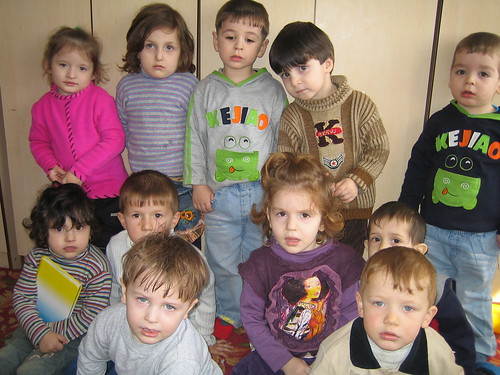
The ‘Little Star’ psychosocial rehabilitation project was set up in 1997 and today employs a team of five professional local psychologists who conduct psychosocial workshops in 20 schools and at the Chechen State University to address psychological distress and trauma caused by violence and human rights violations in Chechnya for young people and their families.
38,000 young people and around 4000 parents have been assisted by Little Star since 1997, 40 local experts have obtained advanced psychology degrees, and curricula and training manuals have been developed. Little Star also provides regular training to teachers at the request of the Chechen Ministry of Education.
The change process of restoring mental health to younger generations and their families is a vital component to building sustainable peace in today’s Chechnya. The principle behind this project is that in order to build long-term sustainable peace and a healthy civil society that is resilient and can contribute to problem-solving without resorting to violence, the psychological health of people in the community, and particularly that of young people needs to be addressed. Psychological trauma needs to be alleviated to enable individuals to overcome fear and confusion, which so easily leads to confrontation and violence. Healthy young people are far more likely to want and be able to play a constructive role in building a peaceful and prosperous society, and to focus on a positive future – perhaps to study or learn a useful skill – rather than being trapped by negative experiences from the past. The Little Star project helps to restore health and bring relief from suffering to the children and young people attending it, thereby addressing personal health issues that could otherwise lead to violence in the future.
In 2018, 4 ‘Little Star’ psychologists conducted therapeutic workshops with creative activities such as simulation games and visual art, music, dance, movement and drama activities to develop inter- personal communication skills and provide a safe space with support and respect, for 150-200 young people referred by teachers engaged in the project. Individual counselling and relaxation exercises will provide more in-depth psychosocial rehabilitation work for those children who require it. This work is conducted as part of the “Power of Goodness” project (see Peace Education).